
Dyslexia, Reading Delays, and the Path to Confident Readers
Disclaimer
-
Disclaimer -
This article is intended for informational purposes only and reflects widely accepted research and educational practices. It is not a substitute for a formal evaluation or individualized professional guidance.
Reading is one of those skills that quietly shapes everything, from school success to confidence to independence. So, when reading doesn’t come easily, it can feel heavy, for both the child and the parent watching it unfold.
Dyslexia and reading delays are more common than most people realize, yet they’re often misunderstood. The encouraging part is this, with the right support and strategy, reading can go from frustrating to empowering.
Dyslexia is a neurobiological difference that affects how the brain processes written language. It is not a reflection of intelligence. Many individuals with dyslexia demonstrate strong reasoning, creativity, and problem-solving skills (Yale Center for Dyslexia & Creativity).
At its core, dyslexia impacts:
Word recognition
Decoding (sounding out words)
Spelling
Reading fluency
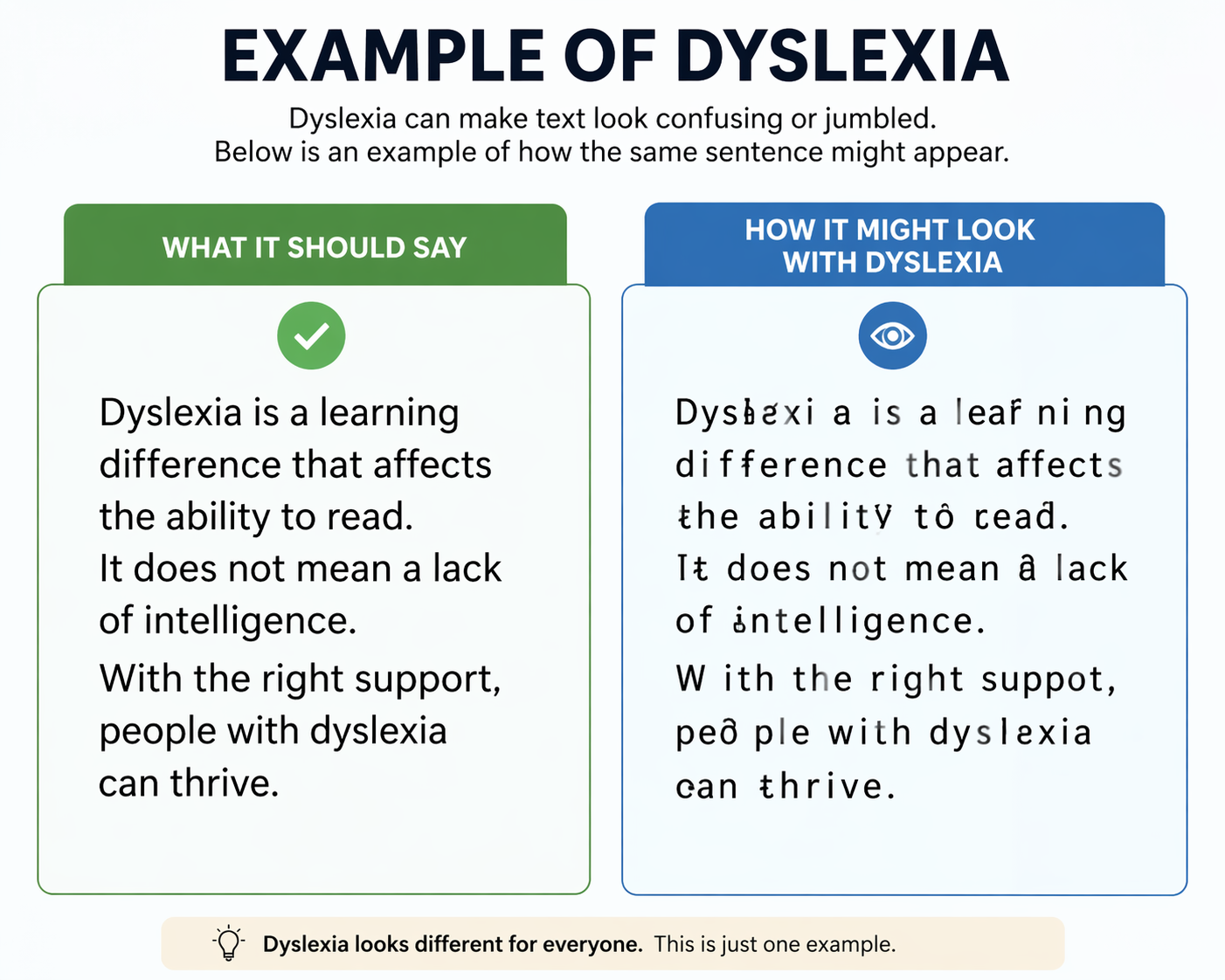
The International Dyslexia Association defines dyslexia as a difficulty with accurate and/or fluent word recognition and poor spelling abilities, often resulting from a deficit in the phonological component of language.
Reading Delays vs. Dyslexia
Not every child who struggles with reading has dyslexia, but every child who struggles deserves support. A reading delay may be related to gaps in instruction or exposure. Dyslexia is more persistent and rooted in how the brain processes language (Understood.org). Early on, they can look very similar, which is why identifying the root cause is so important.
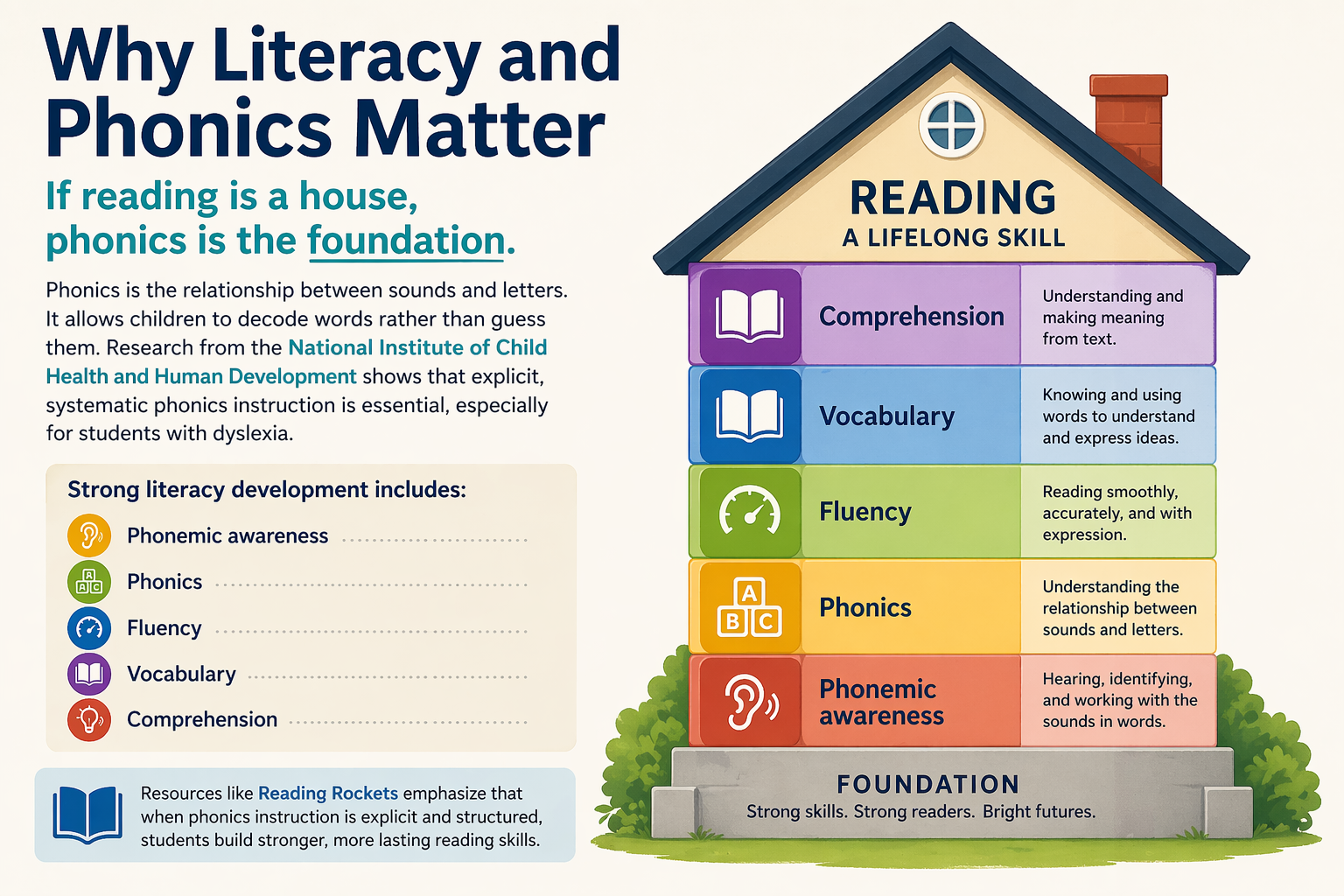
Why Literacy and Phonics Matter
If reading is a house, phonics is the foundation.
Phonics is the relationship between sounds and letters. It allows children to decode words rather than guess them. Research from the National Institute of Child Health and Human Development shows that explicit, systematic phonics instruction is essential, especially for students with dyslexia.
Strong literacy development includes:
Phonemic awareness
Phonics
Fluency
Vocabulary
Comprehension
The Emotional Side of Reading Struggles
Reading struggles are not just academic, they’re emotional.
Children may begin to internalize their difficulties:
“I’m not smart”
“I hate school”
“I’ll never be good at this”
Avoidance, frustration, or behavior changes are often signs of discouragement, not defiance.
How AIM Helps Turn Things Around
At AIM Learning Center, the focus is not just on identifying a struggle but understanding the root of it and building a plan that works.
Comprehensive Evaluations
AIM provides psycho-educational evaluations that assess reading, language, memory, and processing. This helps determine whether a child is experiencing dyslexia, a reading delay, or another learning difference.
Targeted, Structured Support
Intervention is built around structured literacy approaches, including explicit phonics instruction. This aligns with evidence-based practices recommended by leading literacy research organizations.
Confidence Alongside Skill Building
Progress shows up not just in improved reading, but in confidence, participation, and willingness to try again.

Texas-Specific Support for Families
If you’re in Texas, there are specific protections and supports in place for students with dyslexia.
The Texas Education Agency requires public schools to:
Screen for dyslexia
Provide appropriate interventions
Offer services through special education or Section 504
Parents also have the right to:
Request a full evaluation
Request an Independent Educational Evaluation (IEE) if they disagree with school results
Advocate for structured literacy interventions
Understanding these rights can make a significant difference in getting the right support.
What Parents Can Watch For
You don’t need to wait for a formal diagnosis to act.
Signs to look for include:
Difficulty sounding out words
Slow or choppy reading
Trouble remembering sight words
Avoidance of reading
Frustration or anxiety around schoolwork
If something feels off, it’s worth exploring.

Final Thoughts
Reading doesn’t have to be a constant struggle.
With early identification, strong phonics instruction, and the right support, children can build both the skills and the confidence they need to succeed.
And sometimes, all it takes is the right approach at the right time for everything to start clicking.
References & Trusted Resources
International Dyslexia Association
National Institute of Child Health and Human Development
Reading Rockets
Yale Center for Dyslexia & Creativity
Texas Education Agency
U.S. Department of Education